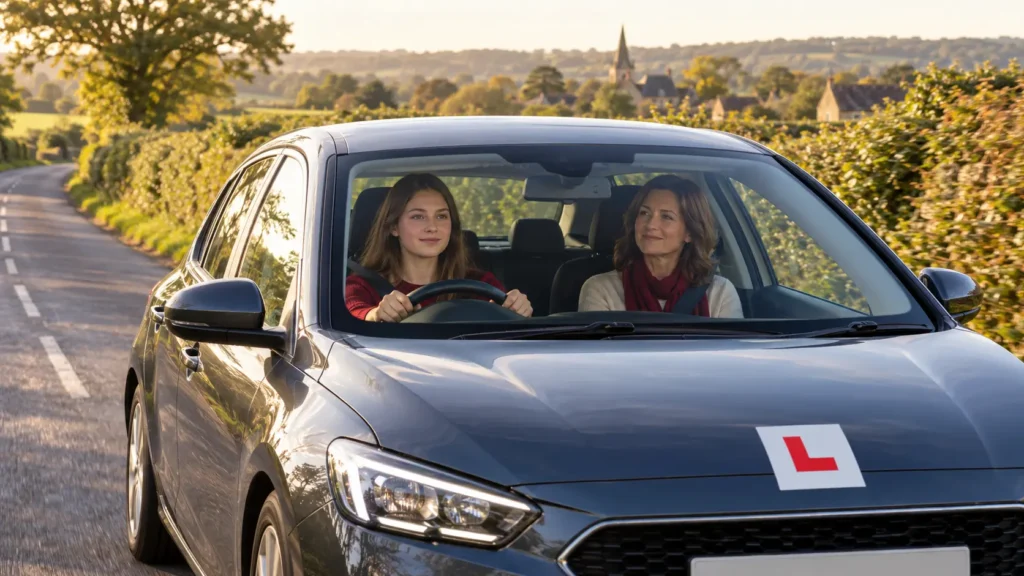
Private practice with a family member or friend is one of the best ways to build experience between lessons. It helps skills stick and gets you used to different roads and conditions. But there are rules you both need to follow.
Who can supervise you
Whoever sits with you must:
- be at least 21 years old
- have held a full licence for at least 3 years (from the UK, the EU, Switzerland, Norway, Iceland or Liechtenstein)
- have a licence for the type of car, for example a manual licence if you’re practising in a manual
- not be banned from driving
They must sit in the front passenger seat, and it’s illegal for them to take any payment, even money towards fuel.
The car, insurance and L plates
- You need a valid provisional licence and must meet the eyesight rules.
- You must be insured, either as a named driver on their policy or with your own learner driver insurance. Some insurers need the supervisor to be over 25.
- L plates must go on the front and back of the car.
- The car must be taxed, safe and have a valid MOT if it needs one.
- An extra rear-view mirror for the supervisor is a good idea.
Rules for the supervisor
- No holding or using a phone, even at traffic lights.
- Stay within the drink-drive limit, and don’t supervise after taking drugs or medicines that affect driving.
- No motorways. Learners can only drive on motorways with an approved driving instructor in a car with dual controls.
- As a full licence holder, they’re in charge of the car, even when you’re driving.
Making practice count
- Ask your instructor what to practise, so you’re working on the same things.
- Start on quiet roads and build up slowly.
- Keep it calm. If either of you is tired or stressed, try another day.
- Keep a note of what you practised to show your instructor.
- Supervisors: the Highway Code may have changed since you learnt, so it’s worth a look.
Driving lessons near you