How to pass the instructional ability test, competence by competence.
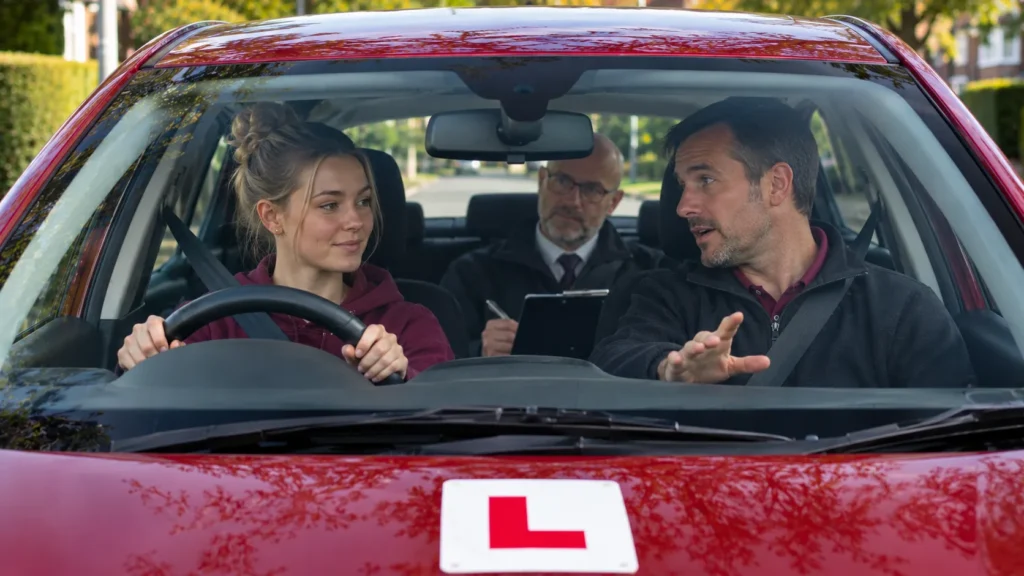
ADI Part 3 is the final test before you can qualify as a driving instructor. It tests your teaching, not your driving, so the way you plan and run the lesson matters most. Many trainees find it the hardest part, because it’s about how your pupil learns, not what you know. In this guide, we explain how ADI Part 3 works, how it’s marked and how to prepare.
At a glance
17
competences marked by the examiner
31/51
minimum score for a grade B pass
8 or more
needed in risk management, whatever your total
Because it’s a real lesson with a real pupil, there’s no fixed script. Instead, the examiner wants to see you teach in a way that genuinely helps your pupil learn, safely.
Overall, the examiner marks 17 competences in 3 areas: lesson planning, risk management, and teaching and learning strategies. Each one then scores 0 to 3, out of 51 in total.
ADI Part 3 grades
| Score | Result |
|---|---|
| 0 to 30 | Fail |
| 31 to 42 | Pass, grade B |
| 43 to 51 | Pass, grade A |
| 7 or less in risk management | Fail, whatever your total |
Also, if the examiner believes you’ve put anyone in danger, they can stop the test, and you’ll fail. So safety always comes first.
First, lesson planning has 4 competences. The examiner asks whether you:
So agree clear goals with your pupil at the start. Then plan a lesson that fits their real needs, rather than a show lesson. Also check the route suits what you’re working on. For example, if you’re working on roundabouts, choose a route with a good mix of them.
Trainer’s tip
Don’t be afraid to change the plan. If your pupil struggles with something unexpected, adapting the lesson is exactly what the examiner wants to see. Just explain why you’re changing it.
Risk management has 5 competences, and it’s the one area that can fail you on its own. The examiner looks at whether you:
So agree with your pupil who is responsible for what, including when you might use the dual controls. Then keep them safe throughout, without taking over the lesson.
Finally, this area has 8 competences. In short, the examiner wants to see whether your teaching helps the pupil learn and take responsibility. They look at whether you:
In practice, that means:
For example, you can bring a learner or a full licence holder. Many trainees bring a learner they’ve been teaching, because they know them well. Whoever you choose, however, pick someone with a genuine learning need, so the lesson feels real. Then agree a goal with them that suits about 40 minutes of driving.
In total, you have 3 attempts at ADI Part 3. If you fail 3 times, you have to pass Parts 1 and 2 again. So prepare properly, and have mock tests with a trainer before you book.
Once you qualify, you’ll have regular standards checks, which are marked in a similar way. So the skills you build for ADI Part 3 will help for your whole career. See Become a Driving Instructor.
A learner or a full licence holder, but not an ADI or someone preparing for ADI Part 3.
Yes, if you hold a trainee licence. Read what is a trainee licence (pink badge)?
Both are passes. Grade A means 43 to 51, and grade B means 31 to 42.
It varies, but most trainees need a good number of hours with a trainer, plus plenty of real lessons. A mock test will show you when you’re ready.
We offer instructor training packages. Read ADI Part 1, 2 and 3 explained and becoming a driving instructor: the honest pros and cons.
Sources: GOV.UK: ADI Part 3 test.
We give one-to-one manual driving lessons in Borehamwood, Colney Heath, Elstree, Harpenden, Hatfield, London Colney, Radlett, St Albans and Shenley.
Instructor training with us: 2 hours for £90, 10 hours for £400, or 40 hours for £1,500.