What rules H1, H2 and H3 mean for you, with real examples from the road.
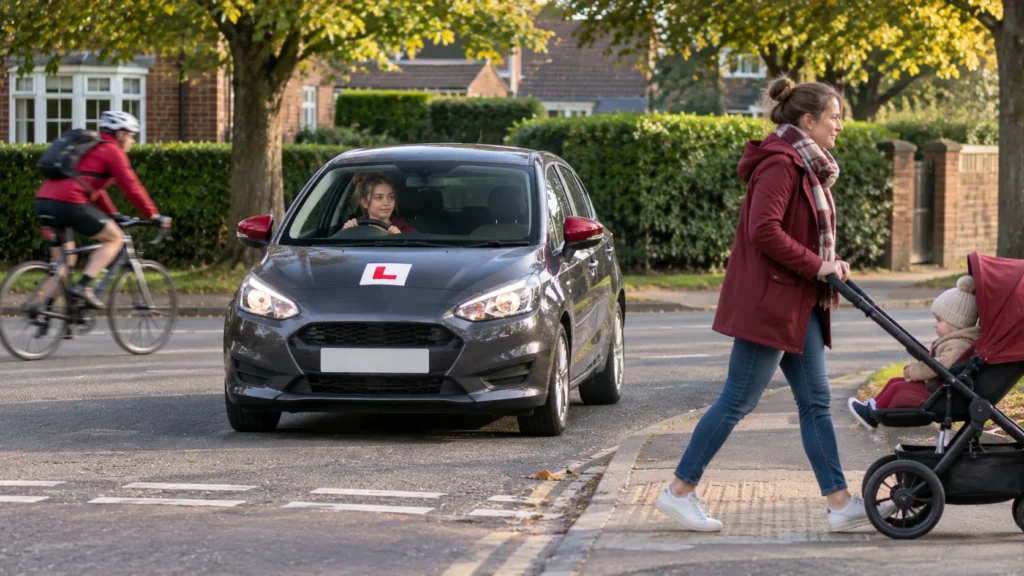
The hierarchy of road users was added to the Highway Code in 2022. It changed how drivers should think about pedestrians, cyclists and horse riders, and it comes up on lessons and tests. Yet many drivers, including experienced ones, still aren’t sure what it means. So here’s a clear guide, with the rules in plain English and real examples you’ll meet on the road.
At a glance
1.5 m
minimum gap when passing cyclists at up to 30mph
2 m
minimum gap for horses and pedestrians in the road
2022
the year the hierarchy was added
The hierarchy of road users puts the people most at risk at the top. From most to least vulnerable, it runs roughly like this:
So, as a car driver, you’re near the bottom of the list. In other words, you carry more responsibility than most of the people around you.
Rule H1 says that those in charge of vehicles that can cause the greatest harm in a collision have the greatest responsibility to take care. So drivers have more responsibility than cyclists, and cyclists more than pedestrians.
That doesn’t mean pedestrians and cyclists can do as they please. Everyone still has to follow the rules. However, as a driver, you carry more responsibility to look out for them, slow down and give them room.
Rule H2 says that at a junction, you should give way to pedestrians crossing or waiting to cross the road you’re turning into or out of. So when you turn into a side road, look out for people waiting to cross, and be ready to stop.
Rule H2 also says you should give way to pedestrians on a zebra crossing, and to pedestrians and cyclists on a parallel crossing. In practice, it means slowing down earlier, looking into the road you’re turning into, and being ready to stop and wait.
Instructor’s tip
As you approach a left turn, look into the new road early. If someone is standing at the kerb looking across, assume they want to cross, and be ready to stop for them.
Rule H3 says you should not cut across cyclists, horse riders or horse-drawn vehicles going ahead when you’re turning, or changing direction or lane. This applies whether they’re on the road, in a cycle lane or on a cycle track.
For example, before turning left, check your left mirror and blind spot for cyclists. If a cyclist is coming up on your left, let them go first, even if it means waiting. Equally, don’t overtake a cyclist just before a left turn and then cut across them.
@h3 Passing cyclists Leave at least 1.5 metres when you overtake cyclists at speeds up to 30mph, and more at higher speeds. If you can’t, wait behind until it’s safe. Also, remember cyclists may ride in the middle of the lane on quiet roads, in slow traffic and near junctions. That’s for their safety, so be patient.
Pass horse riders and horse-drawn vehicles at no more than 10mph, and leave at least 2 metres. Don’t sound your horn or rev your engine, because horses can be easily startled.
Where there’s no pavement, pedestrians may be walking in the road. So slow down, and leave at least 2 metres when you pass.
Give priority to cyclists on roundabouts. They may stay in the left lane even when going right round, so be ready for that and don’t try to overtake them.
When you get out of a parked car, use the hand on the opposite side to the door. This is often called the Dutch Reach. It turns your body, so you naturally look over your shoulder for cyclists and pedestrians.
Quick reference: safe passing
| Who you’re passing | Minimum gap | Speed |
|---|---|---|
| Cyclist, up to 30mph | 1.5 metres | Leave more space at higher speeds |
| Horse rider or horse-drawn vehicle | 2 metres | No more than 10mph |
| Pedestrian walking in the road | 2 metres | Slow down |
The hierarchy of road users doesn’t remove anyone’s responsibility. In fact, everyone, whether walking, cycling, riding or driving, should be considerate and look out for each other. And remember, you’re a pedestrian too sometimes.
On your lessons, we’ll practise these rules on real roads in and around St Albans, where there are plenty of cyclists and busy crossings. For example, we’ll work on:
On your test, the examiner will expect you to follow the hierarchy of road users. Cutting across a cyclist or not giving way to a pedestrian at a junction could easily be a serious fault. Read junctions explained, pedestrian crossings explained and meeting traffic and passing parked cars for more.
No. Everyone must still follow the Highway Code. However, drivers have the greatest responsibility to take care, because they can cause the most harm.
You should give way to pedestrians who are crossing or waiting to cross the road you’re turning into or out of. So be ready to stop.
Yes. The Highway Code says it can be safer for groups or for children, but they should move into single file when it’s safe to let faster vehicles pass.
Yes. It applies to everyone, whenever and wherever they drive, so it’s worth every driver brushing up.
We give one-to-one manual driving lessons in Borehamwood, Colney Heath, Elstree, Harpenden, Hatfield, London Colney, Radlett, St Albans and Shenley.
A 2 hour lesson is £80, or save £20 with our 10 hour package for £380. We accept all major credit cards and PayPal.