Dual carriageways can feel fast and busy at first. However, with good planning, they soon feel much like any other road. Here’s what you need to know.
What is a dual carriageway?
A dual carriageway is a road with a central reservation separating traffic going in each direction. The national speed limit for cars on a dual carriageway is 70mph. However, many have lower limits, so watch the signs. Locally, the A414 and A405 are good examples.
Joining a dual carriageway
- Use the slip road to match your speed to the traffic.
- Check your mirrors and blind spot, then signal right.
- Merge into a safe gap. Don’t stop at the end of the slip road unless you have to.
- Some dual carriageways have short slip roads, or none at all, so be ready to give way.
Which lane to use
On a two-lane dual carriageway, the Highway Code says to stay in the left-hand lane, and use the right-hand lane for overtaking or turning right. So move back to the left once you’ve passed the vehicle you were overtaking.
Overtaking
Use your MSPSL (Mirrors, Signal, Position, Speed, Look) routine. Check well ahead and behind, and only overtake if you can do it safely and legally. Then move back in without cutting in.
Turning right across a central reservation
First, check whether the central reservation is deep enough to protect the whole length of your car. If it is, treat each half as a separate road, and wait in the gap until it’s safe to cross the second half. If the gap isn’t big enough for your car, wait on the left until both sides are clear.
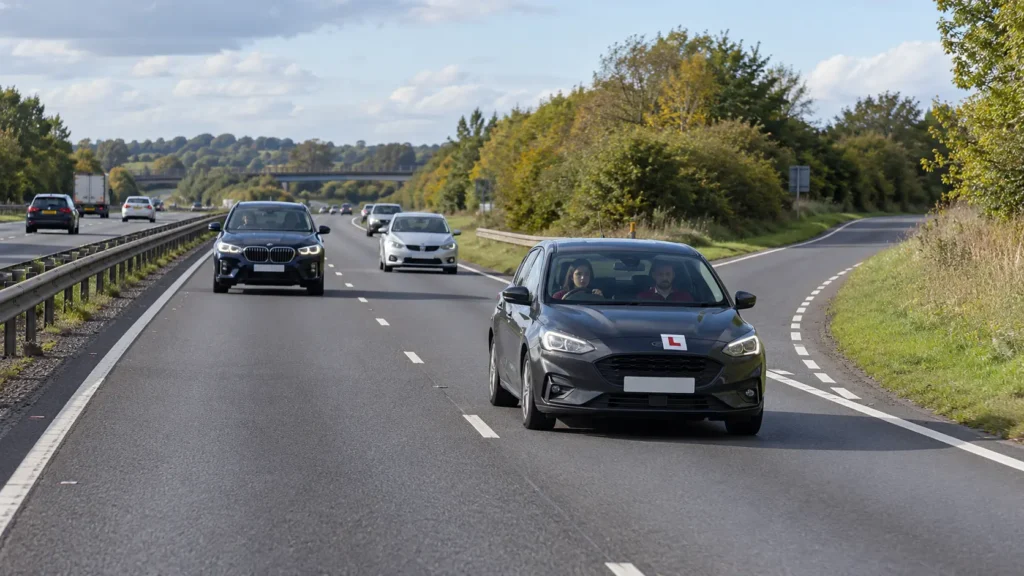
Can learners drive on dual carriageways?
Driving lessons near you