Knowing the speed limits is essential, but it’s only half the story. Choosing the right speed for the road and conditions matters just as much, both on your test and after it.
The national speed limits for cars
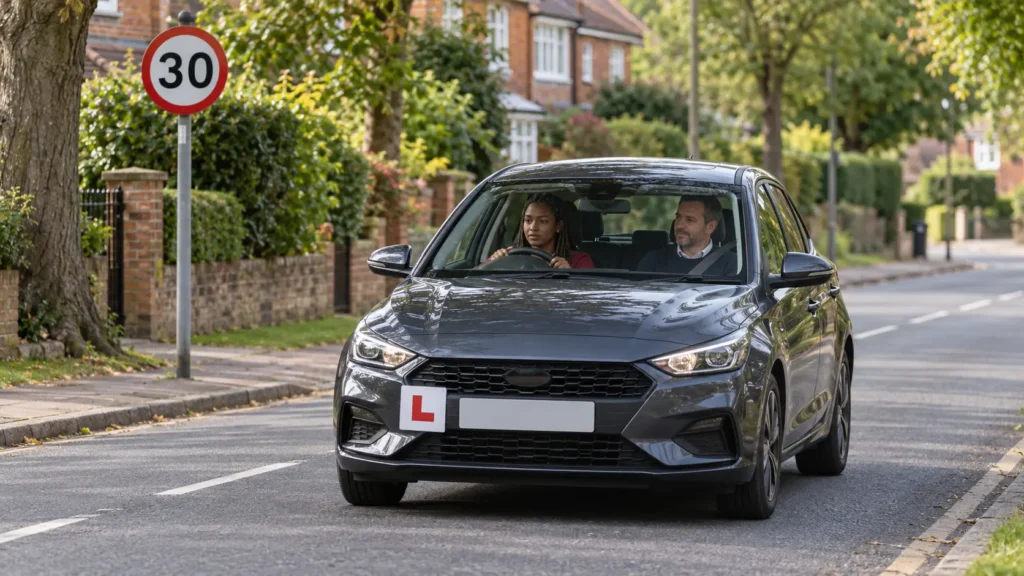
- Built-up areas: 30mph, unless signs show otherwise (20mph in Wales)
- Single carriageways: 60mph
- Dual carriageways: 70mph
- Motorways: 70mph
How to spot the speed limit
- Look for speed limit signs, especially after junctions.
- Street lights usually mean a 30mph limit, unless signs say otherwise.
- A white circle with a black diagonal stripe means the national speed limit applies.
- Smaller repeater signs remind you of the limit along the road.
The limit isn’t a target
The Highway Code says the speed limit is the absolute maximum, and doesn’t mean it’s safe to drive at that speed whatever the conditions. For example, you may need to go much slower near schools, in heavy rain or on a narrow lane.
Variable and temporary limits
On some roads, including smart motorways, the limit changes with the traffic. Also, roadworks often have lower temporary limits. In both cases, the signs show the legal limit, so stick to it.
Speed on your driving test
Going over the limit is a serious fault. However, driving too slowly can also be a fault, because it can hold up other traffic. So the aim is a safe speed that suits the road.
Stopping distances
The faster you go, the longer it takes to stop. Also, in the wet your stopping distance is at least double. Read driving in bad weather for more.
Speeding and new drivers
Speeding points add up quickly. As a new driver, 6 points within 2 years of passing means losing your licence. So read the new driver rules before you pass.
Driving lessons near you