Headlights, full beam, fog lights and hazard lights, explained simply.
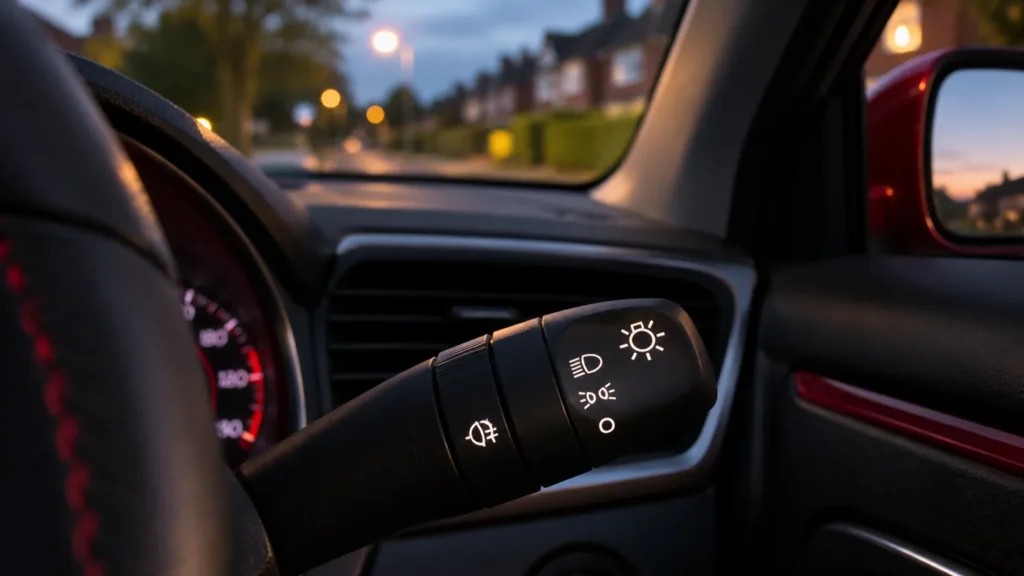
Knowing which car lights to use, and when, helps you see clearly and makes you easy to spot. It also comes up in your show me, tell me questions, so it’s worth getting right. In this guide, we explain each of your car lights, when the Highway Code says to use them, and the mistakes we see most often.
At a glance
100 m
visibility limit when headlights become a must
2
show me, tell me questions on every test
6
types of lights to know, from sidelights to hazards
Each light has its own symbol on the dashboard. Learn them now, and you’ll always know what’s switched on.
| Light | Dashboard symbol colour | When to use it |
|---|---|---|
| Sidelights | Green | When parked at night on some roads, or at dusk |
| Dipped headlights | Green | At night, and in poor visibility |
| Full beam | Blue | Dark, unlit roads with no traffic ahead |
| Front fog lights | Green | Thick fog, when you can’t see far |
| Rear fog light | Amber | Thick fog, when you can’t see far |
| Hazard warning lights | Flashing green arrows | When stopped and temporarily blocking traffic |
Use headlights at night, except on roads with lit street lights. Also, you must use headlights in poor visibility, generally when you can’t see more than 100 metres. Dipped headlights are the right choice whenever there’s other traffic about.
Many drivers also use dipped headlights in heavy rain or on gloomy days, even though it isn’t dark. That’s sensible, because it makes you far easier to see.
Instructor’s tip
Daytime running lights aren’t the same as headlights. On many cars, they don’t switch your rear lights on. So if it’s dull, dark or rainy, switch your dipped headlights on yourself.
Full beam helps you see further on dark, unlit roads. However, you must dip them when you meet other traffic, so you don’t dazzle anyone. Also dip them when you’re following another vehicle, and on left-hand bends where they could dazzle oncoming drivers. When full beam is on, you’ll see a blue symbol on your dashboard.
Some newer cars have automatic full beam. It’s useful, but it isn’t perfect, so stay ready to dip your car lights yourself.
You must not use front or rear fog lights unless visibility is seriously reduced, for example in thick fog. Then switch them off as soon as it improves, because they can dazzle others and hide your brake lights.
The rear fog light is very bright, and the most common mistake is leaving it on. So check for the amber symbol on your dashboard once the fog clears. Read driving in bad weather for more about fog.
Use hazard warning lights when you’re stopped and temporarily blocking traffic, for example if you break down. While driving, only use them on a motorway or unrestricted dual carriageway, to warn drivers behind of a hazard ahead. Then switch them off as soon as the drivers behind have seen the hazard.
Don’t use hazard lights as an excuse to park somewhere you shouldn’t, such as on double yellow lines. Read where you can’t park.
The Highway Code says you should only flash your headlights to let other road users know you’re there. It isn’t a signal to say “go ahead”, “thank you” or “you’re in my way”. Also, never assume a flash means another driver is giving way, because they could mean something completely different.
Indicators and brake lights are car lights too, and they matter just as much. Signal in good time, and cancel your indicator once you’ve turned. And keep in mind that your brake lights only work if they’re clean and the bulbs are working, so check them regularly.
At night, all vehicles must have parking lights on when parked on a road, or in a lay-by, where the speed limit is over 30mph. On roads with a lower limit, you can usually park without lights, as long as you follow the other parking rules.
Also, switch your headlights off when you park, so you don’t dazzle anyone. And don’t leave lights on by mistake, because a flat battery is a frustrating start to the next day.
Heavy rain and spray from lorries can make you surprisingly hard to see. So switch on your dipped headlights, even in the daytime. However, don’t switch on your fog lights unless visibility drops right down, because the glare on a wet road can make things worse for others.
Your show me, tell me questions often include car lights. For example, you might be asked:
We’ll practise all of these on your lessons, so they’re second nature by test day. Read show me, tell me questions explained.
Check your lights regularly, and keep them clean, especially in winter. For example, park facing a wall or shop window to see the reflection, or ask someone to watch while you press the brake. Read basic car checks for new drivers and driving at night.
At night, except on roads with lit street lights, and whenever visibility is seriously reduced. Many drivers switch them on early, at dusk, which is a good habit.
It’s not safe, and the police can stop you. So replace any blown bulb as soon as you can, and carry a spare if your car allows it.
Those are daytime running lights. They help other people see you, but they don’t replace headlights at night or in bad weather.
You must not use them unless visibility is seriously reduced. So switch them off as soon as the fog clears.
We give one-to-one manual driving lessons in Borehamwood, Colney Heath, Elstree, Harpenden, Hatfield, London Colney, Radlett, St Albans and Shenley.
A 2 hour lesson is £80, or save £20 with our 10 hour package for £380. We accept all major credit cards and PayPal.