Tyres, oil, coolant, lights and more, explained simply.
Once you have your own car, keeping it safe is your job. Fortunately, basic car checks only take a few minutes, and you don’t need to be a mechanic. In this guide, we’ll walk you through each check, show you how often to do it, and explain the warning signs to look out for.
At a glance
1.6mm
legal minimum tread depth for car tyres
3 points
possible for each defective tyre
5 minutes
is all most car checks take
Many drivers use the word POWDERY to remember their car checks, and it’s a handy habit to start now. It’s simple, and it covers almost everything you need:
Your tyres are the only part of the car touching the road. So they affect your braking, steering and grip more than anything else.
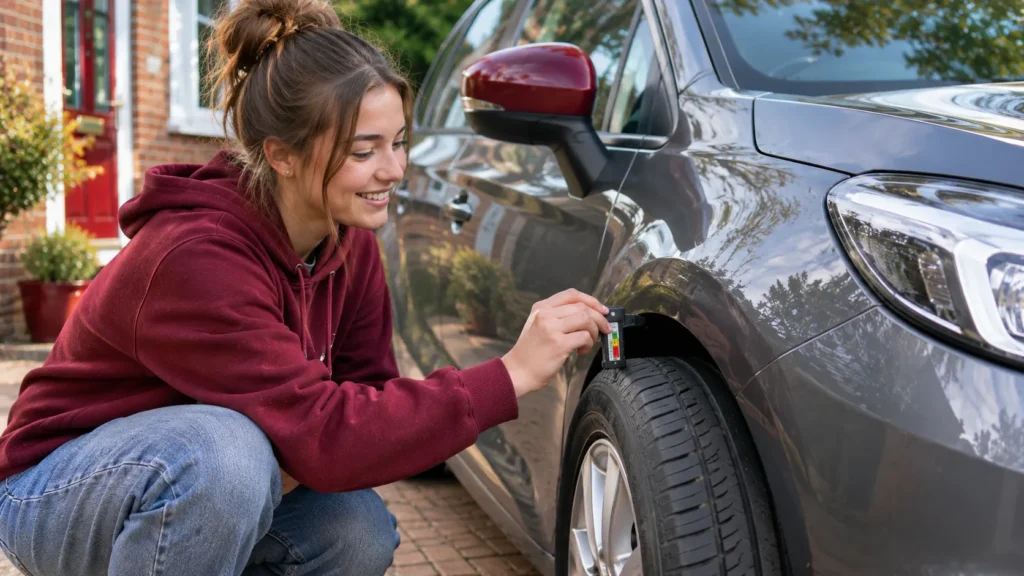
The legal minimum tread depth for cars is 1.6mm, across the central three-quarters of the tyre and all the way round. However, grip drops off well before that, especially in the wet. So many experts suggest changing tyres at around 3mm.
A quick way to check is the 20p test. Put a 20p coin into the main grooves. If you can see the outer band of the coin, your tread may be close to the limit, so get it checked properly.
Check the pressures when the tyres are cold, ideally before you drive. The right figures are in your handbook, or often inside the fuel flap or driver’s door. Also, most petrol stations have an air machine. If your car has a tyre pressure warning light, don’t ignore it.
Look for cuts, bulges or anything stuck in the tyre, such as nails or glass. A bulge in the sidewall is particularly dangerous, because the tyre could fail suddenly.
Driving on defective tyres can mean a fine and 3 penalty points for each tyre. As a new driver, 6 points within 2 years of passing would cost you your licence. Read the new driver rules.
Instructor’s tip
Check your tyres on the same day every week, for example on a Sunday morning. Once it’s part of your routine, it takes less than two minutes.
Oil keeps your engine running smoothly. Without enough of it, the engine can be badly damaged.
Don’t overfill, because too much oil can cause problems too. Also, some newer cars have an electronic oil level instead of a dipstick, so check your handbook.
Check the coolant level only when the engine is cold, because the system can be under pressure when hot. The level should sit between the min and max marks on the tank. If it keeps dropping, get it checked, as there may be a leak.
Also keep your screenwash topped up, especially in winter. Use a proper screenwash mix rather than plain water, because water can freeze. A dirty windscreen with an empty washer bottle is a real danger in low sun.
You don’t need to top up brake fluid yourself, and you shouldn’t open the reservoir. However, you can look at the level through the side of the container. If it’s below the minimum mark, or your brake warning light comes on, get the car checked straight away.
Check all your lights work, including brake lights, indicators, fog lights and reversing lights. For example, park facing a wall or a shop window to see the reflection, or ask a friend to help. Brake lights are easy to miss, so check them regularly.
Also, keep your lights clean, especially in winter, when road grime builds up quickly. Read using your car lights correctly for when to use each one.
As part of your car checks, lift your wiper blades and check the rubber for splits or wear. If they smear or judder, it’s time for new blades. Then clean your windows inside and out, because a dirty windscreen makes glare much worse.
Warning lights follow a simple colour code:
| Colour | What it usually means | What to do |
|---|---|---|
| Red | A serious problem, such as oil pressure or brakes | Stop as soon as it’s safe and check |
| Amber or yellow | Something needs attention soon | Book a check, and read your handbook |
| Green or blue | A system is switched on, such as lights | Nothing, it’s just information |
Check your tyres and lights regularly, at least every couple of weeks, and before a long journey. Also check the oil and fluids about once a month. Then have the car serviced as your handbook recommends, because a service covers far more than your own car checks can.
Most cars need their first MOT by the third anniversary of their registration, and then once a year. You can have the MOT up to a month (minus a day) before it runs out and keep the same renewal date. Don’t forget, it’s illegal to drive without a valid MOT, unless you’re driving to a booked test.
Not really. A tyre pressure gauge and a tread depth gauge are cheap and useful, and a cloth for the dipstick helps too.
A torch, a scraper and de-icer in winter, a blanket, a phone charger, and your breakdown company’s number.
Yes, in a way. You’ll be asked show me, tell me questions, and some of them cover tyres, oil, coolant and lights.
Yes. EVs still need tyre, light, wiper and screenwash checks, and some have coolant too. Check your handbook for what applies.
Many of these checks come up in the show me, tell me questions on your test. So you’re already halfway there. Also, if you’re still shopping, read buying your first car to know what to look at before you buy.
We give one-to-one manual driving lessons in Borehamwood, Colney Heath, Elstree, Harpenden, Hatfield, London Colney, Radlett, St Albans and Shenley.
Our refresher lessons can help you build confidence on any road. A 2 hour lesson is £80.